Check 4 of 5
Before you dig: finding the pipes and cables
Energy Safe Victoria’s advice is to find where the underground pipes and cables are before breaking ground around a home: “Do not excavate until you know what’s underground.” Before You Dig Australia runs a free plan request service that gathers information on the underground networks at a site in one place, so no one has to contact each utility separately.
General information, not advice for a particular site. Energy Safe Victoria’s and Before You Dig Australia’s pages are listed at the foot of this page.
What a spade can hit
Before You Dig Australia calls safety a fundamental part of any project, and says its free tools give everyone working near utility infrastructure the plans and information they need. It says any project, work on private property included, can damage the assets around it, and that the result can be service interruptions, delays, costly repairs and, at worst, injury or death. It says homeowners have, over the years, dug up underground infrastructure by accident, causing major service disruptions, financial penalties and injuries to themselves and the people around them. It also warns that asset owners may seek compensation for damage done to their assets.
Before You Dig Australia’s tips for homeowners say never to assume how deep pipes and cables are, because they can be buried just below the surface.
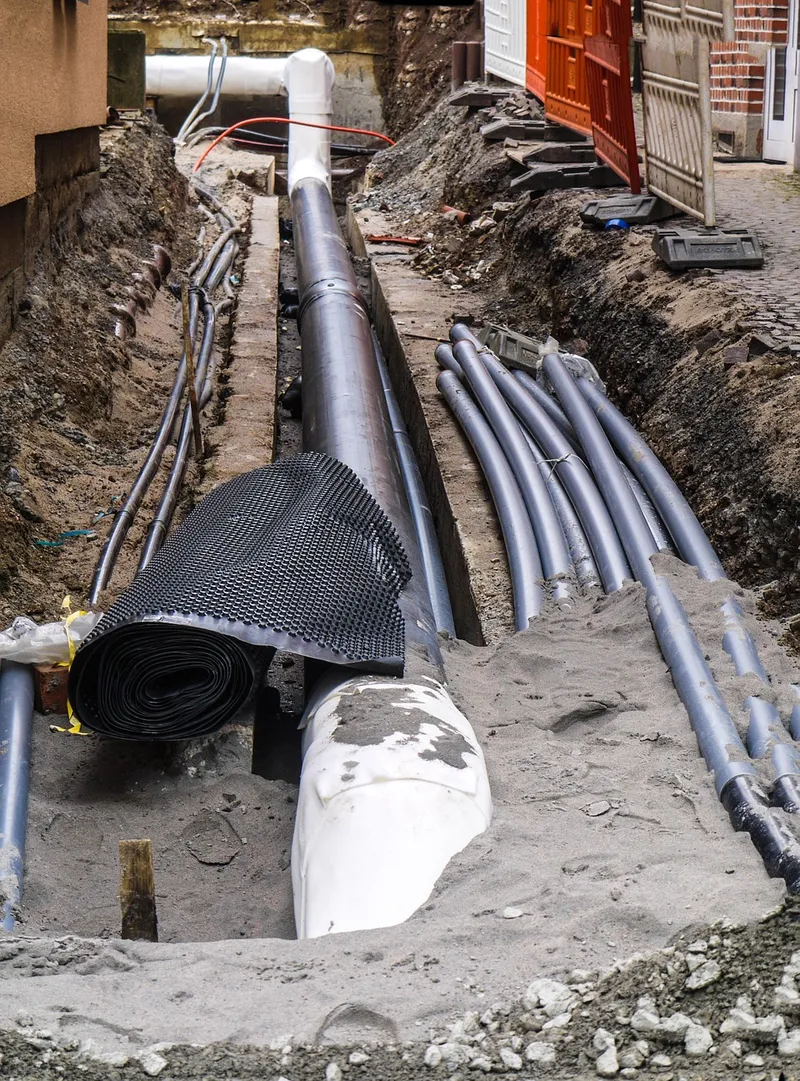
From enquiry to first dig
When you hire a landscaper, fencer or pool builder, the digging is theirs, but Before You Dig Australia’s first tip is for you. Put in a working order, its homeowner tips run like this:
- Agree who lodges the enquirySettle who will lodge the enquiry before any contractor or tradesperson starts excavation work on your property.
- Lodge it before work startsA homeowner about to do work that involves digging or excavating is asked to read the tips and lodge a free enquiry before starting. The service is online and in the app stores.
- Read the confirmationThe dig site confirmation email that follows an enquiry gives the details of the asset owners.
- Read the responses for no-go zonesRequirements for underground no-go zones are in the responses the asset owners send after the enquiry. Where there is nothing specific about them, contact the asset owners directly.
- Locate on siteCheck the site for clues, like the water, gas and electricity meters and the telecommunications box, and consider a skilled locator to help find the assets on private property.
These steps are Before You Dig Australia’s tips, put in our own words and in a working order; its page for homeowners, listed at the foot of this page, has them in full.
What the plans can and cannot show
Before You Dig Australia is careful about its own plans. It calls them indicative only. They may show the lead-ins to a property or mains running through its boundary, and they may not show detail inside your boundary. That is the gap a skilled locator is there to fill.
| Place | What it says |
|---|---|
| Just past the boundary | Pipes and cables may sit just outside the property, under the footpath, driveway or nature strip, and next to fence lines. |
| Near the meters | The water, gas or electricity meters and the telecommunications box are clues to where services run. |
| Close to the surface | Depth cannot be assumed: services can be just below the surface. |
If something is damaged, Before You Dig Australia’s tip is to keep a record of the information and any notes you make.
Excavators, compactors and no-go zones
Heavy machines raise the stakes. Before You Dig Australia says anyone digging or excavating, or using heavy machinery or compacting equipment near underground services, needs to follow safe work practices, including the no-go zones for people and machinery around certain assets. For a crew bringing in an excavator or a compactor, those zones are part of the job, and the asset owners’ responses are where to find them.
Looking up as well as down
Before You Dig Australia’s advice is to get plans and information for both the underground and the overhead infrastructure at a site before work starts. Its referral service covers what is underground, and its Look Up and Live tool covers overhead powerlines, including for work on private property. Both tools are free. Energy Safe Victoria adds that you should know where the powerlines attached to your house or shed are when working around the home. Its advice goes on:
“Always keep:
- well clear of electric wires attached to your house or shed, and
- metal ladders well away from powerlines and ensure your ladder has rubber over the feet.”
The guide to trees near powerlines covers the overhead side in full.